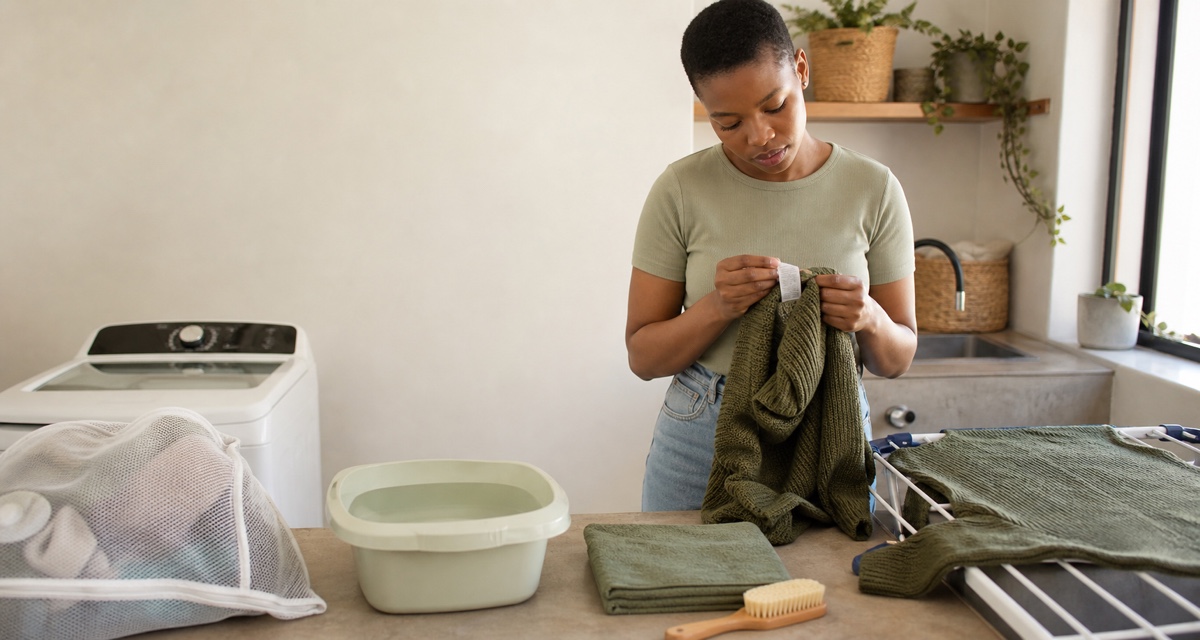
For a worn garment, usually yes—when the care label allows you to clean it safely. Inspect it first, follow the garment's instructions, wash uncertain colours separately, and let it dry completely before photographing or packing it. Do not wash an unworn, new-with-tags item merely to satisfy a universal rule; preserve the tags, inspect it and describe its actual state. If cleaning could damage a dry-clean-only, leather, suede, beaded or fragile vintage piece, use a suitable professional service or disclose clearly that it has not been cleaned.
There is no responsible universal instruction to hot-wash, bleach or soak every preloved garment. Different fibres, dyes, trims and finishes require different care. A clean-looking item can still be damaged by the wrong process, while a freshly washed item can still have a stain, repair or odour that the buyer needs to know about.
The care-label-first preparation method
1. Inspect before cleaning
Cleaning can change the condition of an item, so begin with a record of what you actually have. Use bright neutral light and check:
- front, back, underarms, collar and cuffs;
- seams, hems, lining and pockets;
- buttons, hooks, zips, elastic and drawstrings;
- stains, fading, colour transfer and pilling;
- holes, thinning fabric and previous repairs;
- glued, printed, sequinned or beaded details; and
- smoke, perfume, pet, food or damp odours.
Empty every pocket and remove loose items. Photograph material defects before cleaning. If the care label is present, photograph that too. This record helps you notice whether cleaning caused shrinkage, dye movement, a loosened trim or another change that must appear in the listing.
Do not use fragrance to hide an odour or photograph around a stain. Preparation improves presentation; it does not erase the seller’s duty to describe the item honestly.
2. Read the complete label
Read the fibre content and every care symbol before choosing a method. Washing, bleaching, tumble drying, ironing and dry cleaning are separate decisions. “Machine washable” does not automatically mean high heat, and permission to wash does not automatically permit tumble drying or bleach.
South African care-labelling guidance reflects those differences. The current SARS care-labelling annexure, effective 10 September 2024, gives examples ranging from unrestricted cotton care to garments that must not be bleached, tumble dried, ironed, washed or dry-cleaned. The current ISO 3758:2023 overview likewise treats washing, bleaching, drying, ironing and professional textile care as separate treatment categories.
If the label is missing, unreadable or appears inconsistent with the garment, do not invent the fibre content or assume a wet-cleaning method from appearance alone. Ask a textile-care professional familiar with the material and construction, or leave the item uncleaned and disclose the missing label and actual preparation.
Machine wash, hand wash, dry-clean or disclose?
This table is a decision aid, not a replacement for the actual label.
| What the garment says or shows | Sensible seller route | What to record or disclose |
|---|---|---|
| Machine wash, with a stated temperature and cycle | Follow the stated temperature, cycle and drying restrictions; use an appropriate detergent | That it was machine washed, only if true; any change in fit, colour or condition |
| Hand wash only | Follow the label, handle gently and avoid twisting or stretching the item out of shape | That it was hand washed, only if true; any dye transfer or distortion |
| Dry-clean only | Use a suitable professional cleaner, or leave uncleaned and state that clearly if the item is otherwise fit for sale and the marketplace permits it | The cleaning date or receipt if retained; never call it dry-cleaned when it was not |
| Do not wash | Do not put it through a normal wet wash; follow the permitted care route or seek specialist advice | The actual preparation performed and any remaining odour or marks |
| Missing or unreadable label | Do not infer fibre content or attempt a wet clean from appearance alone; consult a textile-care professional or leave it uncleaned | That the care label is missing; do not invent fibre content or care history |
| Leather, suede, fur-like pile, structured tailoring, glued trim, beadwork or fragile vintage construction | Avoid a routine wash unless the label expressly supports it; use a cleaner familiar with the item | Material uncertainty, fragile areas, previous repairs and whether professional cleaning occurred |
If the cleaning cost is too high relative to the likely sale price, that is an economic decision—not permission to make a false cleanliness claim. You can obtain a quote, adjust the price and disclose the status, or decide not to list. Our South African pricing guide shows how preparation cost and remedy risk can be kept separate from market value.
Why the first wet clean should often be separate
An unfamiliar preloved item may release dye, lint or residue. If the care label permits wet cleaning but you do not know how the colour behaves, wash it separately the first time rather than risking other garments.
Where the care label and the cleaning-product instructions permit the proposed wet method, a cautious colour-transfer check on a hidden area with a clean white cloth may reveal an obvious problem before a full clean. Stop if you see unexpected colour transfer, surface damage or adhesive failure. A hidden-area check does not prove that the whole garment is colourfast or suitable for washing.
Sort by colour and fabric behaviour rather than putting the entire resale pile into one load. Close zips or hooks where appropriate, protect delicate surfaces and use a laundry bag when the label and construction support it. Do not remove a stubborn mark through escalating experiments with bleach, acids or improvised chemical mixtures. An honestly disclosed stain is preferable to a damaged garment or an inaccurate “perfect condition” description.
Delicate, vintage and altered clothing needs a slower decision
Age alone does not tell you how a garment should be cleaned. A vintage cotton shirt may tolerate its label instructions; a newer garment with bonded trim may not tolerate heat or soaking. Previous alterations, weakened seams and replacement dyes also change the risk.
Before cleaning a delicate item:
- inspect whether the seams and fabric can withstand handling;
- check whether trims are sewn, glued or painted;
- note repairs, altered hems and replacement components;
- follow any surviving manufacturer instruction; and
- seek specialist advice when the item’s value or fragility makes trial and error unreasonable.
Do not market a seller-applied spray, steam or short airing session as professional cleaning or sanitisation. Describe the actual action: for example, “aired in a clean, dry, ventilated space”, “hand washed according to the label” or “professionally dry-cleaned on 20 August 2026”.
What to do about odour
Start by identifying the likely source. A stale storage smell, heavy perfume, smoke and damp are different problems. Airing a garment in a clean, dry, shaded and well-ventilated place may help some storage odours, but it does not justify hiding what remains.
Then use only a care method permitted for the garment. Avoid adding a stronger fragrance to overpower the smell; a buyer may be sensitive to perfume and the original odour may return. If smoke, pet or damp odour remains after appropriate care, state it plainly and decide whether the item is still suitable for sale.
If an item has persistent dampness or mould-like marks, do not conceal them or pack the item. Pause the listing and obtain appropriate cleaning or disposal advice for the actual material and condition.
Dry completely before photographing and packing
An item that feels cool, heavy or damp at a thick seam is not ready for a sealed parcel. Follow the label’s drying method and allow waistbands, pockets, linings and padded areas to dry fully. Do not use a tumble dryer merely to meet a shipping deadline when the label prohibits it.
Inspect the item again after drying. Check for shrinkage, distortion, colour change, a loosened seam or a stain that became easier to see. Update the measurements and photographs if anything changed. Pack only once the item is fully dry and the listing still matches it.
How to disclose condition after cleaning
A useful listing separates facts about cleaning from facts about condition.
Cleaning statement
Say only what you know:
- “Machine washed on a cold cycle according to the care label.”
- “Professionally dry-cleaned; receipt available.”
- “Not cleaned by the seller because the label says dry-clean only.”
- “Care label is missing; item has been aired but not washed.”
Avoid unsupported claims such as “germ-free”, “sterilised”, “allergen-free” or “professionally sanitised”. This guide found no primary basis for promising those outcomes from an ordinary home wash.
Condition statement
Describe visible and sensory facts:
- labelled size and current measurements;
- fading, pilling, stretching or shrinkage;
- stains, holes and thinning areas;
- repairs, tailoring and replacement buttons;
- zip, hook, elastic and drawstring condition;
- remaining odour; and
- missing labels, belts, pads or other components.
Show each material flaw in a close photograph. “Good condition” is an opinion; “light pilling under both sleeves and a 4 mm mark near the hem” gives the buyer something they can evaluate.
Vakoop’s current condition choices are New, Like New, Good, Fair and Poor. Choose the closest available label, then use the description and photographs to disclose fit, wear, stains, damage and other flaws. Cleaning an item does not move it automatically into a better condition tier.
For suppliers acting in the ordinary course of business, section 41 of South Africa’s Consumer Protection Act prohibits false or misleading representations about material facts and deceptive failure to disclose one. The Act’s application to an occasional private wardrobe sale depends on the facts, so this is not a claim that every private seller has identical statutory duties. Truthful condition and cleaning descriptions remain sensible practice for every listing.
Hygiene-sensitive items and marketplace rules
Check the current prohibited-item policy before cleaning or listing underwear, swimwear, cosmetics or another hygiene-sensitive item. Policies differ by platform and category, and they can change. For Vakoop, read the current terms and ask through the official contact route when an item's eligibility is unclear. A category appearing in a listing form is not, by itself, proof that every item in that category is permitted.
Never assume that washing makes a prohibited item eligible. Confirm the current marketplace rule first.
A seller’s final preparation checklist
Before publishing or shipping, confirm:
- I inspected and photographed the item before cleaning.
- I read the full care label rather than using one method for every garment.
- I chose machine washing, hand washing, professional cleaning or disclosure based on the actual item.
- I did not use a universal hot-wash, bleach or improvised chemical recipe.
- Where wet cleaning was permitted, I checked uncertain colours separately and stopped if the fabric reacted badly.
- The item is completely dry, including seams, lining and pockets.
- I rechecked measurements and condition after cleaning.
- Every stain, hole, repair, alteration, missing part and persistent odour is written and photographed.
- My cleaning statement describes only what actually happened.
- The item is permitted under the marketplace’s current rules.
Frequently asked questions
Is it illegal to sell an unwashed second-hand garment in South Africa?
This research did not identify a blanket rule requiring every occasional private seller to wash every used garment before sale. Product labelling, consumer-protection and marketplace rules may still apply depending on the seller and item. Follow the care label, the marketplace policy and truthful disclosure rather than making a universal legal assumption. This is general information, not legal advice.
Should I hot-wash all thrifted clothes before reselling them?
No. Use the temperature and process permitted by the actual care label. Heat can shrink, fade, distort or damage some fibres and trims. There is no one safe temperature for every garment.
Can I sell a dry-clean-only item without paying to dry-clean it?
Check the marketplace policy. If the item is permitted and is otherwise suitable for sale, disclose plainly that you did not clean it and describe its current condition and odour. Do not imply that airing, steaming or spot treatment was professional dry cleaning.
Does washing let me describe a used item as “like new”?
No. Cleaning history and wear are different facts. A washed garment may still be faded, stretched, repaired, pilled or altered. Use the marketplace’s condition options and describe the visible evidence.
Should I use vinegar or bleach to remove second-hand clothing smells?
Do not apply a universal home remedy or combine cleaning products. Check the label and each product's instructions, then consider the fibre, dye and trim. For a valuable or fragile item, professional advice is safer than experimenting. Always disclose an odour that remains.